


Most salons use scheduling software today, and for good reason. It organizes schedules, everyone can view who's booked when, and clients can schedule appointments online. Compared to manually noting down appointments, calls or messages, it feels like a major upgrade.
But here's what keeps happening. Your calendar looks full one week, then barely has appointments the next. You can't pinpoint why. Was it something you did? A competitor opening nearby? Just bad timing?
Usually, the answer is much simpler than you think.
Your scheduling software tracks appointments. But it does not help you be discoverable by clients, and it can't tell you why your bookings are inconsistent.
What Is Salon Scheduling Software?
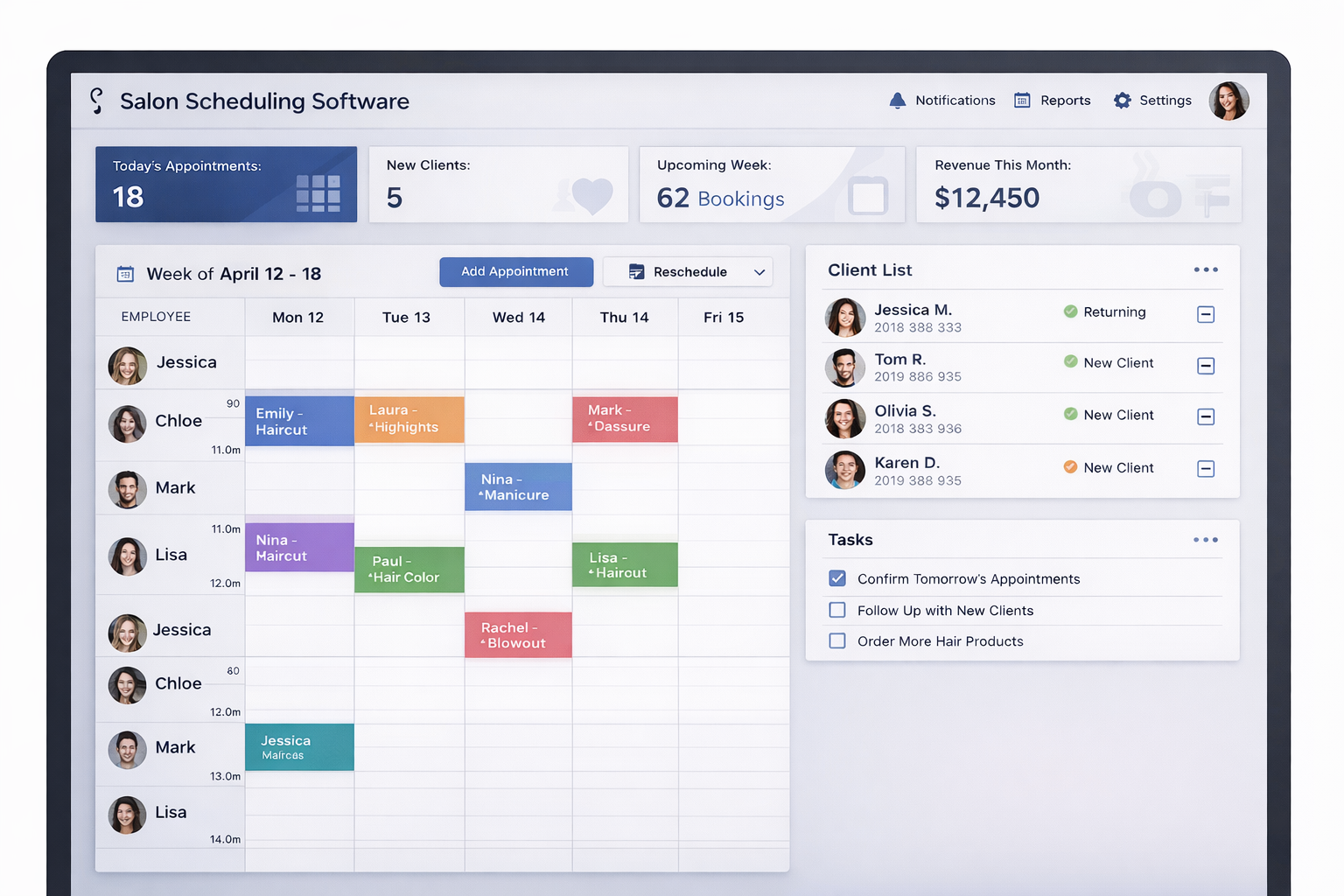
Salon scheduling software is designed to help salons schedule appointments, give staff a clear view of their schedules, and keep daily operations running smoothly.
In short, salon scheduling systems answer two questions: when the appointment happens and who is assigned to it.
What it can't tell you is how people found your salon, why they decided to book with you instead of someone else, or what made them back out at the last second. These gaps matter more than most people realize.
What Salon Scheduling Software Does Well
Salon scheduling software, as the name suggests, makes scheduling operations smoother and more organised. They help you set appointments across your team properly, prevent you from accidentally booking two people at once, let clients choose times that fit their schedules, and reduce the constant texting and calling between staff members.
If you're running a busy salon, you need this kind of scheduling software that brings order to your workflows. Without it, things fall apart fast.
But there's a built-in assumption here: The system works great once someone has decided they want an appointment. But it just doesn't do anything to influence that decision in the first place.
Why Salon Scheduling Software Doesn't Create Consistent Bookings
You need a steady stream of clients interested in your salon to keep bookings stable. Scheduling software has no role or impact on what drives clients to book or how to instil interest when it drops off.
This becomes obvious in a few specific situations.
The Booking Drop-Off Gap Most Salons Never See
This happens all the time, and most salon owners have no idea about it.
Someone lands on your booking page, and they start filling in information. Maybe they pick a service, maybe they look at your calendar. Then they leave and move on with their day. Why? Could be anything. They got distracted. They wanted to check prices again. They weren't sure if they should book yet.
Your scheduling software can't show you any of this. It doesn't track how many people almost booked, where they stopped, what made them hesitate, or who they were.
Once they're gone, they're just gone.
You have no information to look at and no way to reach out. These moments happen over and over, and they add up to a lot of appointments that could have happened but didn't. That's why your bookings feel random even when you know people are looking.
Why Scheduling Software Can't Recover Lost Interest
When someone backs out before confirming, the system treats it like the end of the story. No reminders or follow-ups, which in turn gives you no insight into what went wrong.
The same thing happens with people who browse your services, look at your prices, or check availability without actually booking. None of that activity gets captured. You lose the chance to connect with people who were genuinely thinking about coming in.
When you can't see these moments or do anything about them, you're basically guessing about how to grow.
Clean Schedules Don't Always Mean Stable Demand
A lot of salon owners think that if their scheduling system runs smoothly, bookings should just happen. But scheduling only handles what you already have.
Stable bookings come from showing up when people are searching for you, turning interest into actual appointments, and getting clients to come back regularly. Scheduling software touches a small piece of this, and even then, it just sits there waiting.
When you're not working on discovery and follow-up, your bookings feel unpredictable. Even though the system itself seems to be working fine.
Managing Appointments vs Growing a Salon
Running your salon day-to-day is different from building it into something bigger.
Managing appointments means keeping things organized and making sure everything runs on time. Growing your salon means building real momentum and knowing what to expect week after week.
Software built for growth looks past the calendar. It focuses on how people discover you, why some book while others don't, and how to bring clients back without you having to chase them down manually. It fills in what scheduling tools leave out, rather than trying to replace them.
Why Zoca Is Necessary for Consistent Salon Bookings
This is exactly why Zoca exists.
Zoca handles everything that gets those appointments on the calendar in the first place - from discovery, conversion, booking, and retention. Zoca is the only all-in-one AI salon marketing and booking platform that helps with end-to-end operations and marketing.
Zoca takes salons from unpredictable booking patterns to something much steadier by tackling the three things that just a scheduling software doesn't cover: Discovery, conversion, booking, and retention.
How Zoca's AI Agents Work Together to Drive Growth
Zoca uses three smart AI agents that each handle a different part of the client journey, from when someone first finds you to when they come back again.
The Discovery Agent makes sure new clients can actually find you when they're looking. It strengthens your presence in search results and local directories so your salon appears consistently when people search for what you offer. It optimizes your Google Business Profile and ensures that all the information is accurate and complete.
More people seeing you means more chances to book. That's something your scheduling software can't do on its own.
AI Front Desk Agent
The AI Front Desk Agent works on turning interest into confirmed bookings, especially when people usually back out. It spots where potential clients drop off, walks them through the booking steps more smoothly, and removes the roadblocks that stop them from finishing. It answers inquiries immediately and also helps in booking when you're occupied with clients.
Instead of quietly losing interested people, you get a real shot at converting them into confirmed appointments.
The Loyalty Agent handles getting past clients back through your doors using proven client retention strategies. It reaches out to previous customers at the right moment, without you needing to remember who's due for a visit or send reminders yourself. By prompting people to rebook at the right time, it keeps your calendar more consistent month after month.
Put together, these three agents tackle visibility, conversion, and retention. The exact things your scheduling software doesn't handle.
Why This Creates More Predictable Bookings
Your scheduling software keeps everything organized. Zoca pays attention to demand, behavior, and what happens after someone shows interest.
When you have discovery, conversion, booking, and retention all working properly, your bookings stop being a mystery. Instead of wondering why things were slow last week, you actually understand what's happening and can respond to it.
This shift from guesswork to predictability is exactly what salons experience when discovery, conversion, and retention work together.
Real example: North Central Massage & Aesthetics moved from inconsistent bookings to 1700% increase in leads with Zoca.
Wrapping Up
Your scheduling software does what it's supposed to do. It was never meant to solve every growth challenge you face.
If bookings feel inconsistent, scheduling is probably not the problem. More often, you're missing visibility, insight into how clients behave, or systems to recover interest and bring people back.
Zoca lets you move past just managing appointments. You can start building a more reliable way to keep your calendar full over time.
Book a demo with Zoca and see how steady bookings come from discovery, conversion, booking, and retention working together.
Frequently Asked Questions
1. What is salon scheduling software used for?
Salon scheduling software is used to manage appointments, staff schedules, and daily availability. It helps salons stay organized by showing who is booked, when services are scheduled, and which staff members are assigned. Its main purpose is operational efficiency, not creating demand or attracting new clients.
2. Why are salon bookings inconsistent even with scheduling software?
Salon bookings often feel inconsistent because scheduling software only tracks confirmed appointments. It does not show how many people visited your booking page, where they dropped off, or why they chose not to book. Without this information, salons cannot understand or fix the reasons behind slow weeks.
3. Can salon scheduling software help bring in new clients?
No, salon scheduling software does not help bring in new clients. It only works after someone has already decided to book. New client acquisition depends on being visible when people search, building trust, and guiding them through the booking process, which scheduling tools do not handle.
4. What happens when someone leaves without booking an appointment?
When someone leaves the booking page without confirming, scheduling software does not report that activity to salon owners. You do not know who they were, what service they looked at, or why they left. These missed opportunities add up over time and are a common reason bookings feel unpredictable.
5. Do salons need more than scheduling software for consistent bookings?
Yes, salons need more than scheduling software to achieve consistent bookings. Predictable demand comes from three things working together: being discoverable, converting interested visitors into bookings, and bringing past clients back regularly, which a salon marketing software like Zoca handles. Scheduling software manages appointments, but consistency requires systems that support all three stages.